Subscription activation guide via LIRALAND License Manager.
Learn how to sign in to your account, confirm the application launch, and activate your subscription to start using LIRALAND products.
- 1 November 2025
- LIRALAND
Test 1.1. 3D frame with elastic supports under a concentrated load
- 1 November 2025
- LIRALAND
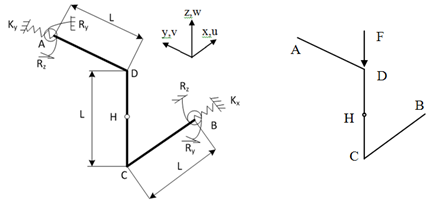
Test 1.1. 3D frame with elastic supports under a concentrated load
The stress-strain state of a 3D bar system with elastic restraints under the concentrated load
- 30 October 2025
- LIRALAND
Test 1.2. Plane truss subjected to mechanical, thermal and kinematic loads
- 30 October 2025
- LIRALAND
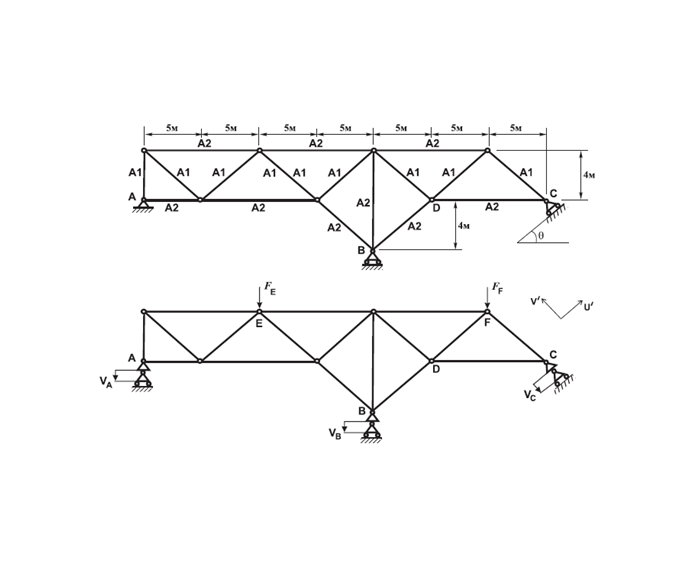
Test 1.2. Plane truss subjected to mechanical, thermal and kinematic loads
The stress–strain state of a plane truss under mechanical, thermal and kinematic loads.
- 29 October 2025
- LIRALAND
Test 1.3. Beam with a prestressed tie
- 29 October 2025
- LIRALAND
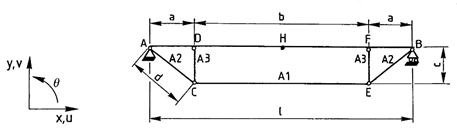
Test 1.3. Beam with a prestressed tie
The stress–strain state of a beam with a tie, taking into account transverse shear deformations in the beam.
- 28 October 2025
- LIRALAND
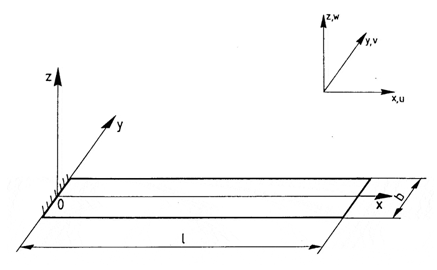
Test 1.4. Rectangular cantilever plate under uniformly distributed load
- 28 October 2025
- LIRALAND
Test 1.4. Rectangular cantilever plate under uniformly distributed load
The stress–strain state of a cantilever plate.
- 27 October 2025
- LIRALAND
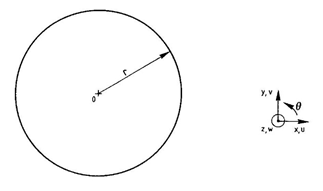
Test 1.5. A circular plate clamped along its contour under a uniformly distributed load
- 27 October 2025
- LIRALAND
Test 1.5. A circular plate clamped along its contour under a uniformly distributed load
The stress–strain state of a circular plate.
- 26 October 2025
- LIRALAND
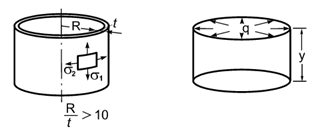
Test 1.6. Cylinder with free ends under internal pressure
- 26 October 2025
- LIRALAND
Test 1.6. Cylinder with free ends under internal pressure
The stress–strain state of a cylinder with free ends subjected to internal pressure.
- 25 October 2025
- LIRALAND
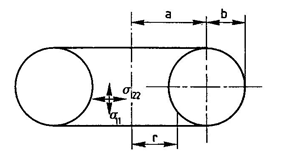
Test 1.7. Torus under internal pressure
- 25 October 2025
- LIRALAND
Test 1.7. Torus under internal pressure
The stress–strain state of a torus subjected to internal pressure.
- 24 October 2025
- LIRALAND
Test 1.8. Cylindrical shell under self-weight
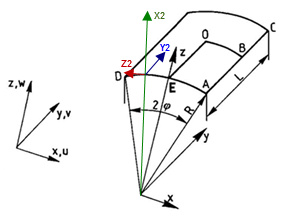
- 24 October 2025
- LIRALAND
Test 1.8. Cylindrical shell under self-weight
The stress–strain state of a cylindrical shell subjected to self-weight.
- 23 October 2025
- LIRALAND
Test 1.9. Torsion of a cantilever plate under a couple of forces
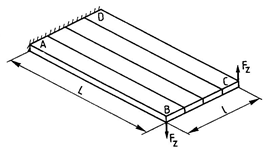
- 23 October 2025
- LIRALAND
Test 1.9. Torsion of a cantilever plate under a couple of forces
The stress–strain state of a narrow cantilever plate subjected to a couple of forces causing torsion.
- 22 October 2025
- LIRALAND
Test 1.10. Tension of a prismatic bar under self-weight
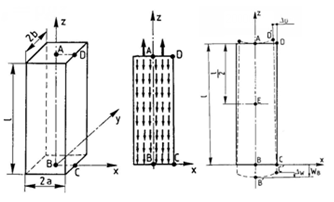
- 22 October 2025
- LIRALAND
Test 1.10. Tension of a prismatic bar under self-weight
The stress–strain state of a vertical prism subjected to loading due to its self-weight.
- 21 October 2025
- LIRALAND
Test 1.11. Pure bending of a prismatic beam
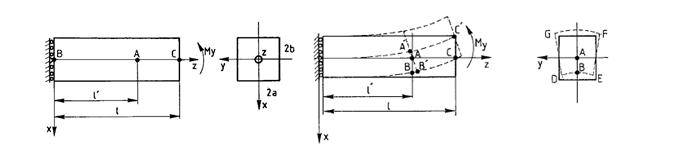
- 21 October 2025
- LIRALAND
Test 1.11. Pure bending of a prismatic beam
The stress–strain state of a prismatic beam subjected to a bending moment.
- 20 October 2025
- LIRALAND
Test 1.12. Beam on an elastic foundation
- 20 October 2025
- LIRALAND
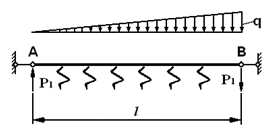
Test 1.12. Beam on an elastic foundation
The stress–strain state of a beam on an elastic foundation under the concentrated forces and a distributed load varying according to a triangular law.
- 19 October 2025
- LIRALAND
Test 1.13 Curved Beam (Golovin’s Problem)
- 19 October 2025
- LIRALAND
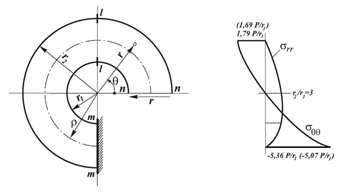
Test 1.13 Curved Beam (Golovin’s Problem)
The stress state of a curved narrow beam with a rectangular cross-section under bending by a concentrated force applied to the free end.
- 18 October 2025
- LIRALAND
Test 1.14. Compression and bending of a wedge by a concentrated force (Mitchell problem)
- 18 October 2025
- LIRALAND
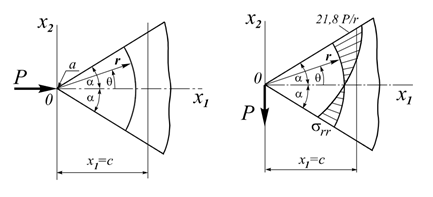
Test 1.14. Compression and bending of a wedge by a concentrated force (Mitchell problem)
The stress state of a symmetric wedge of unit thickness subjected to compression and bending by concentrated forces
- 30 September 2025
- LIRALAND
Test 1.21. Plane truss subjected to a concentrated load
- 30 September 2025
- LIRALAND
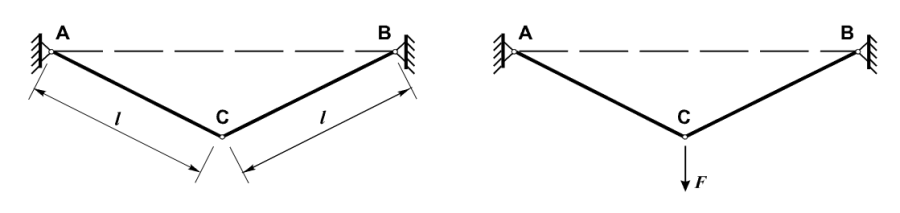
Test 1.21. Plane truss subjected to a concentrated load
The stress–strain state of a plane truss under the concentrated load.
- 29 September 2025
- LIRALAND
Test 1.22. Plane pin-jointed bar system subjected to a concentrated load
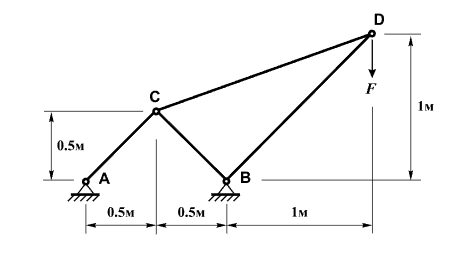
- 29 September 2025
- LIRALAND
Test 1.22. Plane pin-jointed bar system subjected to a concentrated load
The stress–strain state of a system of intersected bars subjected to a distributed load and a concentrated load acting in the plane of the system.
- 28 September 2025
- LIRALAND
Test 1.23. Cantilever beam subjected to a concentrated load
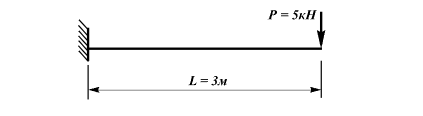
- 28 September 2025
- LIRALAND
Test 1.23. Cantilever beam subjected to a concentrated load
Bending in the plane of loading under the concentrated load, neglecting transverse shear deformations. The maximum values of transverse displacement w, rotation angle θ, and bending moment M are verified.
- 27 September 2025
- LIRALAND
Test 1.24. Spatial pin-jointed bar system subjected to a concentrated load
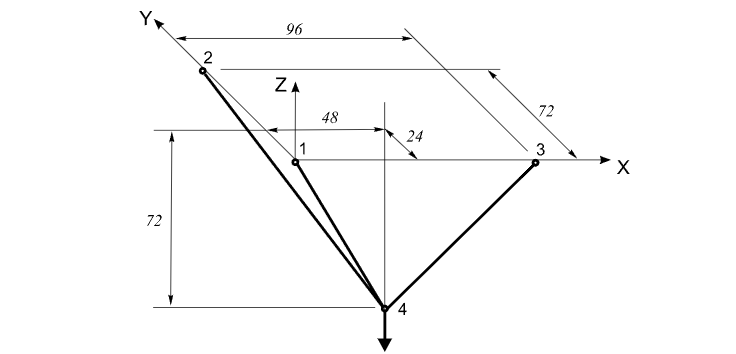
- 27 September 2025
- LIRALAND
Test 1.24. Spatial pin-jointed bar system subjected to a concentrated load
The stress state in the elements of a spatial pin-jointed bar system subjected to a concentrated load.
- 26 September 2025
- LIRALAND
Test 1.26. Simply supported beam subjected to a concentrated load and uniformly distributed load
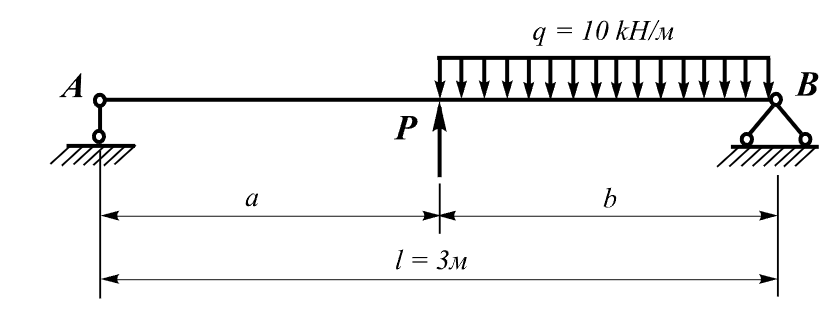
- 26 September 2025
- LIRALAND
Test 1.26. Simply supported beam subjected to a concentrated load and uniformly distributed load
Combined loading (transverse load, concentrated load) acting in a single plane, neglecting transverse shear deformation. Displacements and internal forces are verified.
- 25 September 2025
- LIRALAND
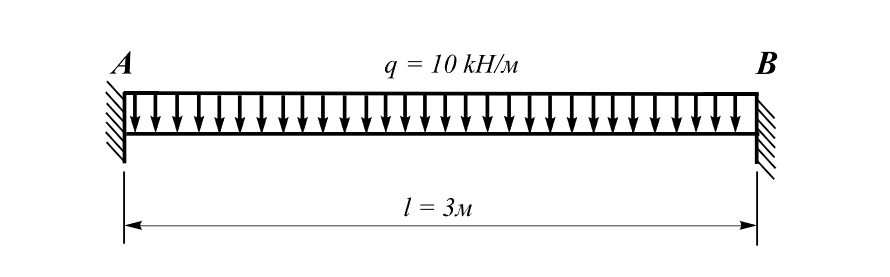
Test 1.27. Fixed-ended beam subjected to a uniformly distributed load
- 25 September 2025
- LIRALAND
Test 1.27. Fixed-ended beam subjected to a uniformly distributed load
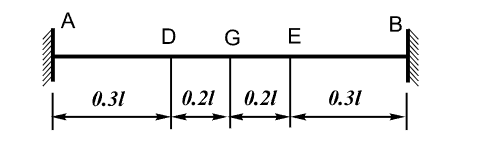
Beam fixed at both ends subjected to in-plane loading without considering shear deformation. The maximum transverse deflection and bending moments are verified.
- 24 September 2025
- LIRALAND
Test 1.28. Beam fixed at both ends subjected to uniformly distributed load, concentrated axial and transverse forces, and a bending moment
The stress–strain state of a beam fixed at both ends under the uniformly distributed load, concentrated axial and transverse forces, and a bending moment.
- 23 September 2025
- LIRALAND
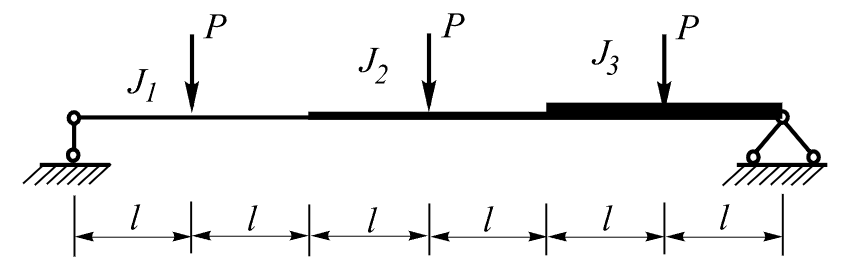
Test 1.29. Three-step simply supported beam subjected to concentrated loads
- 23 September 2025
- LIRALAND
Test 1.29. Three-step simply supported beam subjected to concentrated loads
The deformed state of a simply supported beam (with three stiffness steps) subjected to concentrated loads, neglecting transverse shear deformation. Transverse displacements and rotations are verified.
- 22 September 2025
- LIRALAND
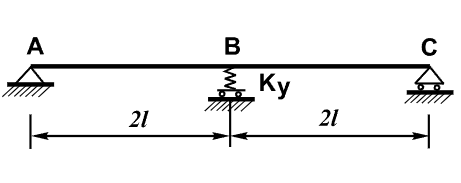
Test 1.30. Two-span simply supported beam with an intermediate elastic support subjected to concentrated transverse forces applied at mid-spans
The stress–strain state of a two-span simply supported beam with an intermediate elastic support subjected to concentrated transverse forces applied at the mid-spans.
- 21 September 2025
- LIRALAND
Test 1.31. Beam (on an elastic horizontal foundation) subjected to concentrated vertical forces

- 21 September 2025
- LIRALAND
Test 1.31. Beam (on an elastic horizontal foundation) subjected to concentrated vertical forces
The stress–strain state of a beam (on an elastic horizontal foundation) under the concentrated vertical forces.
- 20 September 2025
- LIRALAND
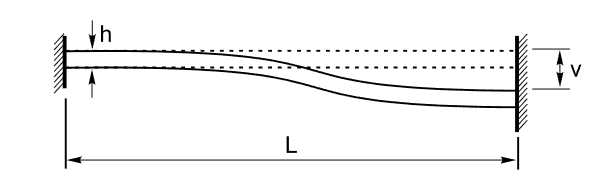
Test 1.32. Beam fixed at both ends subjected to transverse displacement of one end
- 20 September 2025
- LIRALAND
Test 1.32. Beam fixed at both ends subjected to transverse displacement of one end
The stress state of a beam fixed at both ends under the transverse displacement of one end.
- 19 September 2025
- Oleksandr Gorodetsky Dmytro Gorodetskyi
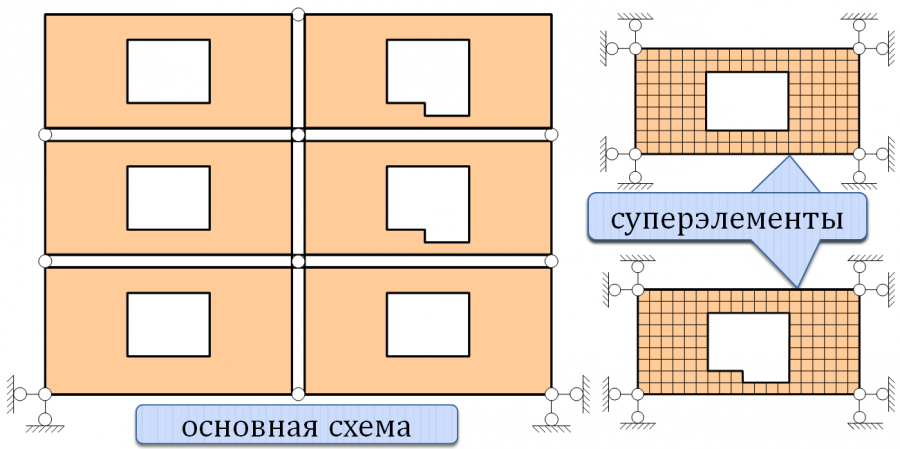
Possibilities of applying super-elements in solving various problems of structural mechanics
If the design model is too large, it can be convenient to organize a recursive analysis by partitioning the entire system into subsystems—super-elements (SE). This approach works well when the subdivision is natural: for example, a building composed of volumetric blocks (each volumetric block is a super-element) or ...
- 19 September 2025
- LIRALAND
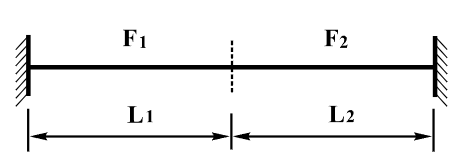
Test 1.33. Plane system of two coaxial bars subjected to a temperature change
- 19 September 2025
- LIRALAND
Test 1.33. Plane system of two coaxial bars subjected to a temperature change
The stress–strain state of a plane system of two coaxial bars subjected to a temperature change.
- 18 September 2025
- LIRALAND
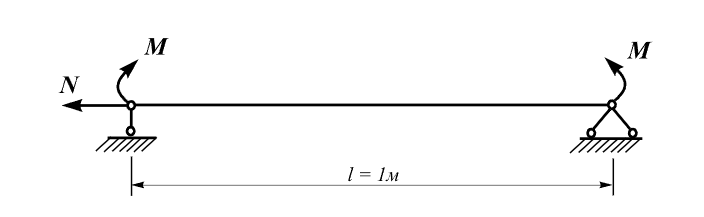
Test 1.34. Stress–strain state of a simply supported beam under combined longitudinal and transverse bending
- 18 September 2025
- LIRALAND
Test 1.34. Stress–strain state of a simply supported beam under combined longitudinal and transverse bending
Combined axial–bending deformation in a single plane.
- 27 February 2025
- Pavlo Frantov
CodeMeter keys. Protection for LIRALAND applications.

- 27 February 2025
- Pavlo Frantov
CodeMeter keys. Protection for LIRALAND applications.
The LIRA-FEM version 2025 will use a different protection from Wibu-Systems AG, a German business. The page provides setup instructions for the CodeMeter network license server along with general details about key types.
- 14 October 2024
- Oleksander Lazarev
Running the LIRA-FEM software on Mac computers

- 14 October 2024
- Oleksander Lazarev
Running the LIRA-FEM software on Mac computers
This paper explores two main methods of running LIRA-FEM on a Mac: virtualization through Parallels Desktop for M-series processors and using Boot Camp for Macs with Intel processors. We will go over the benefits and drawbacks of each approach. Finally, we'll include a detailed installation tutorial for LIRA-FEM using Parallels...

- 4 March 2024
- Oleh Palienko Oleksii Bashynskyi
Types of Pilot Reinforcement (PR) in LIRA-CAD module: pattern of reinforcement in a column in two layers
Suppose we have to make the automatically generated PR types come from the LIRA-CAD module to the LIRA-FEM program; in these PR types, the reinforcement pattern is arranged in two layers.
- 21 February 2024
- Oleg Palienko
Thermal loads

- 21 February 2024
- Oleg Palienko
Thermal loads
The article describes how to model thermal loads in SAPFIR. To model the thermal loads in LIRA-CAD module of the program, use the specialised tools available on the "Analytics" tab, on the "Analytical load" panel, in the "Loads" drop-down list.
- 13 February 2024
- Oleksiy Bashinskiy
Moving loads

- 13 February 2024
- Oleksiy Bashinskiy
Moving loads
The "Moving load" tool is mentioned to specify traffic loads on different types of structures: stylobate pavement, floor slabs of parking, bridge structures, motorways, etc.
- 12 February 2024
- Oleg Palienko
Soil pressure

- 12 February 2024
- Oleg Palienko
Soil pressure
For various purposes it can be useful to model the soil pressure on the basement walls. The commands necessary for this purpose are presented on the "Create" tab, "Loads" panel.

- 13 July 2023
- Dmytro Gorodetskyi Maryna Romashkina
Triangulation. Construction of finite elements meshes
The construction of finite element meshes is an important stage of solving the problem of determining the SSS of structures. This stage is associated with satisfaction of a number of contradictory requirements.