Objective
To determine the buckling factor of a beam subjected to different types of load.
Reference
L.D. Landau, E.M. Lifshitz. Theory of Elasticity. M.: Nauka, 1987, p. 123.
Problem statement
To determine the buckling factor of a beam under different boundary conditions at its free end and subjected to different types of load.
Design model
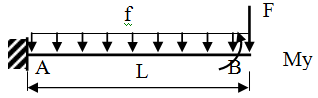
A beam with different boundary conditions at its right-hand end is subjected to:
a) a concentrated transverse load applied at the free end;
b) a bending moment applied at the free end;
c) a uniformly distributed transverse load.
Geometry
Length L = 1 m
Section moments of inertia Iу = 1,5*10-5 m4; Iz = 1,333*10-7 m4
Polar moment of inertia Ik = 1,333*10-7 m4
Material properties
Modulus of elasticity Е = 2*107 tf/m2
Shear modulus G = 0,75*107 tf/m2
Boundary conditions
All degrees of freedom are restrained at Point A.
Point B:
variant 1 – free end;
variant 2 – rotation uX is restrained;
variant 3 – rotation uX and displacement Y are restrained;
variant 4 – rotations uX and uZ are restrained.
Loads
f = 1 tf/m, F = 1 tf, Mу = 1 tf*m.
Note
The problem is solved in 3D formulation (model type 5).
The model is generated with FE type 10 – arbitrary 3D bar.
Nodes: 101. Elements: 100.
Output data
|
|
|
|
|
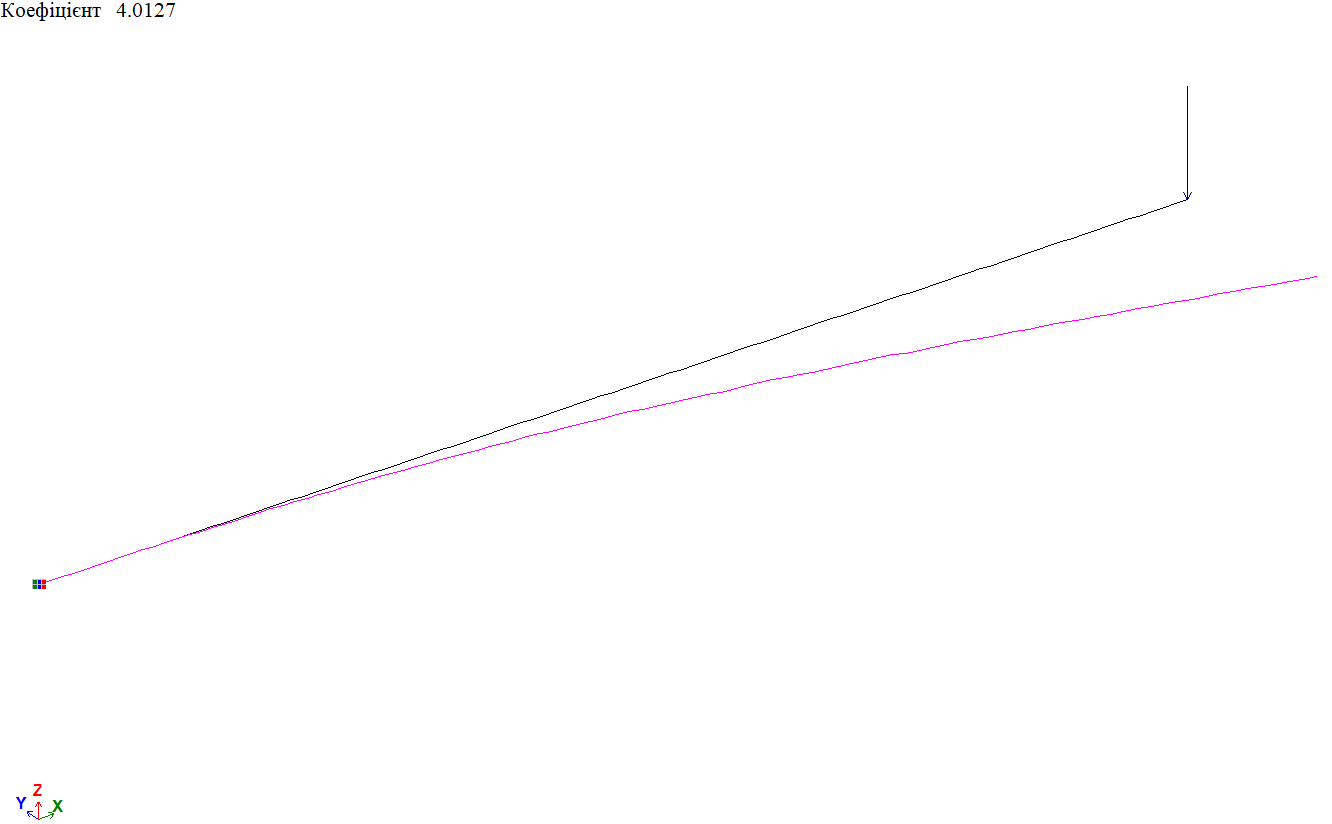
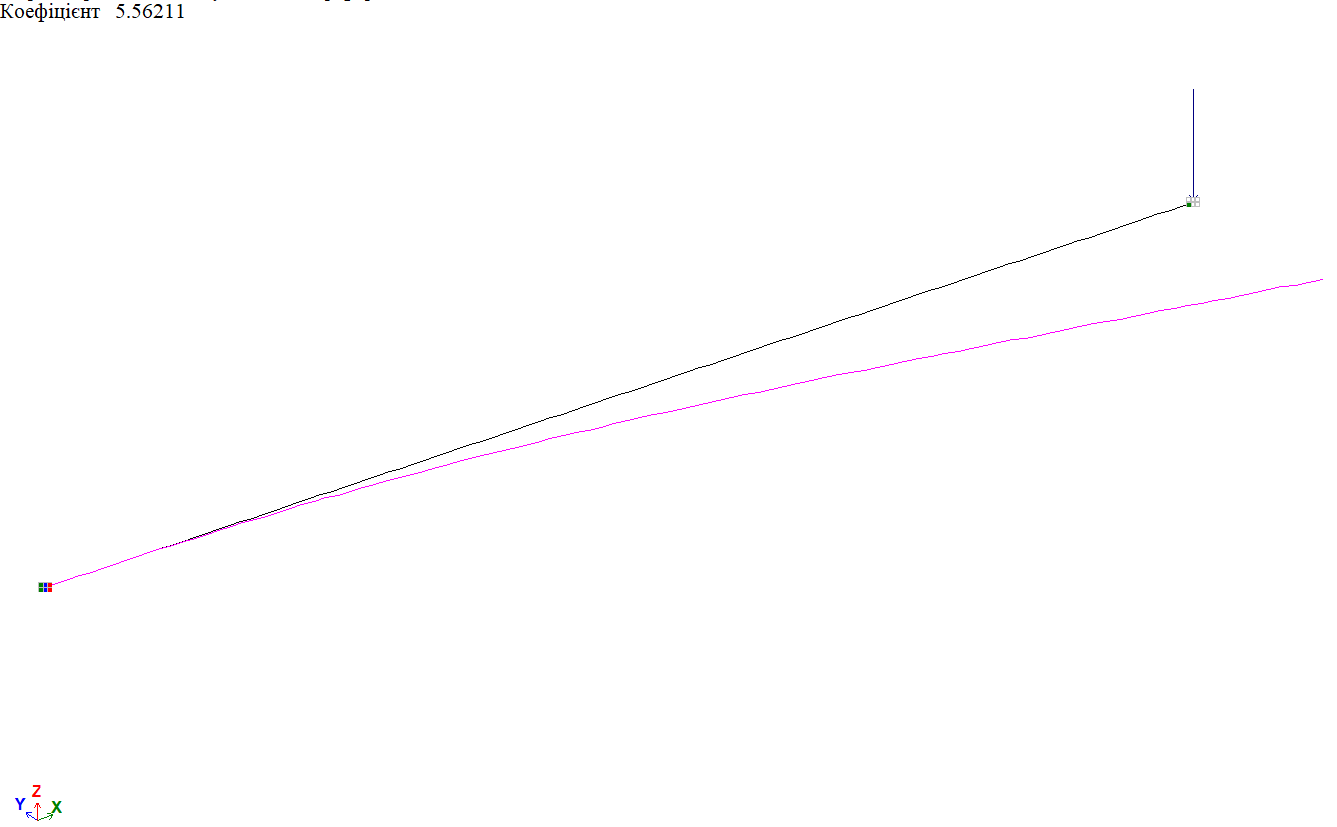
Buckling mode under a concentrated load F at the free end of the cantilever, Variant 1
|
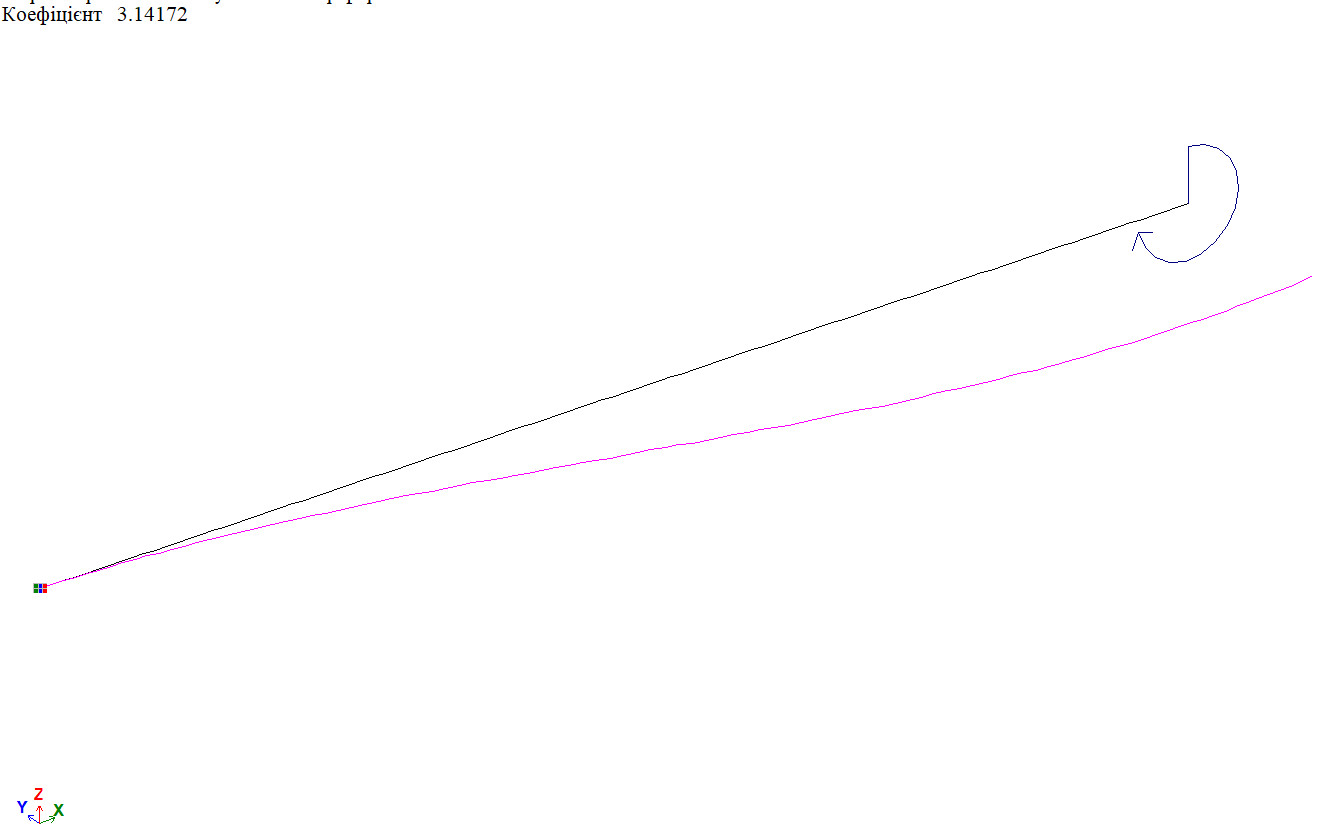
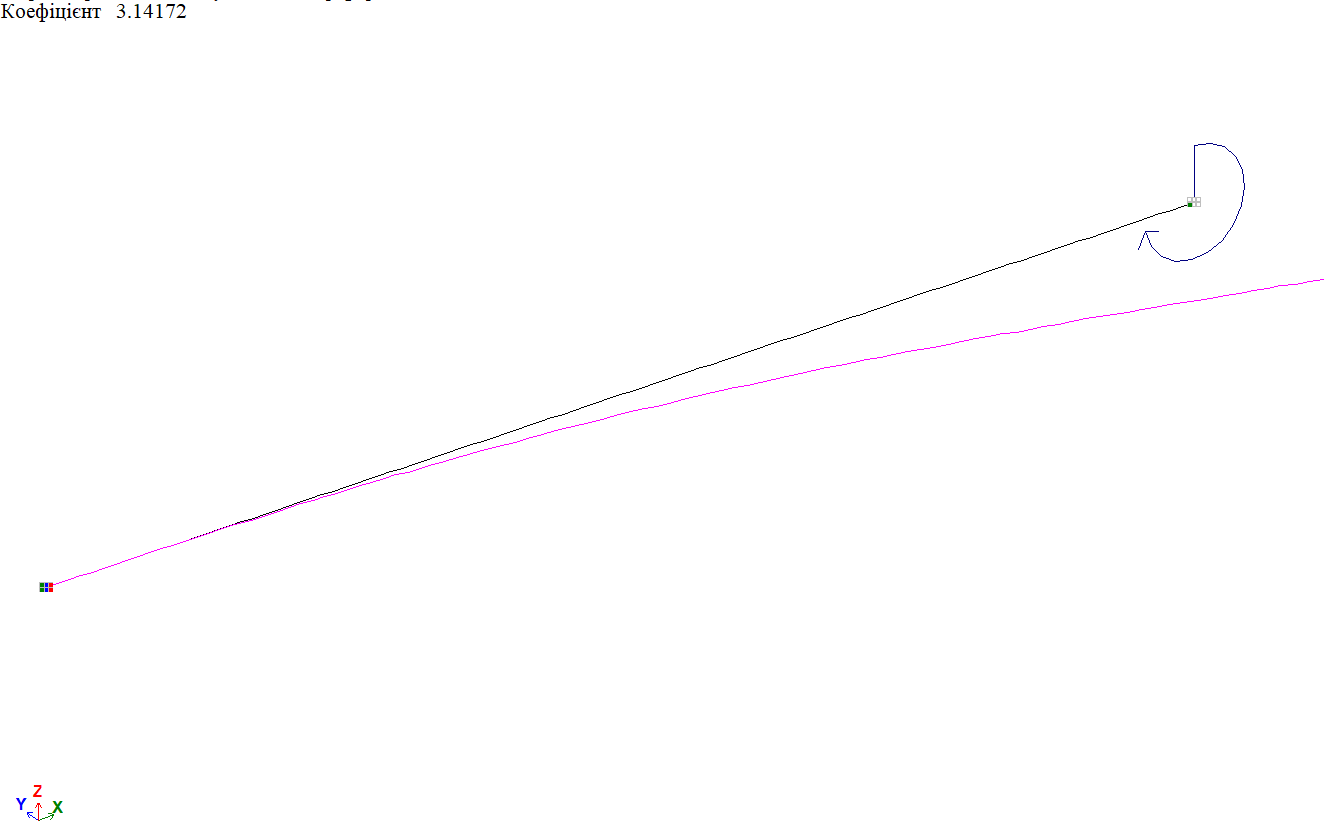
Buckling mode under a bending moment M at the free end of the cantilever, Variant 1
|
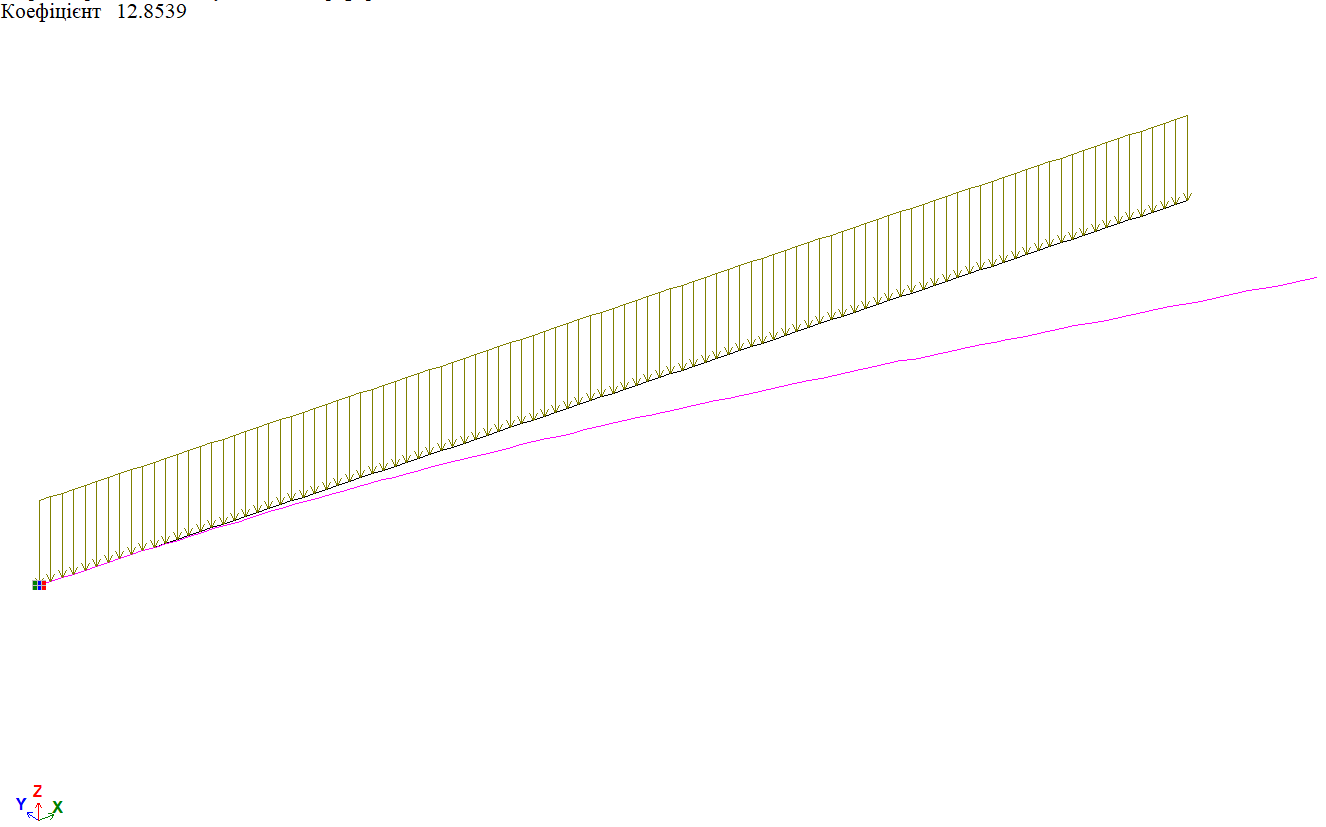
Buckling mode under a uniformly distributed load f at the free end of the cantilever, Variant 1
|
|
|
|
|
|
Buckling mode under a concentrated load F at the free end of the cantilever, Variant 2
|
Buckling mode under a bending moment M at the free end of the cantilever, Variant 2
|
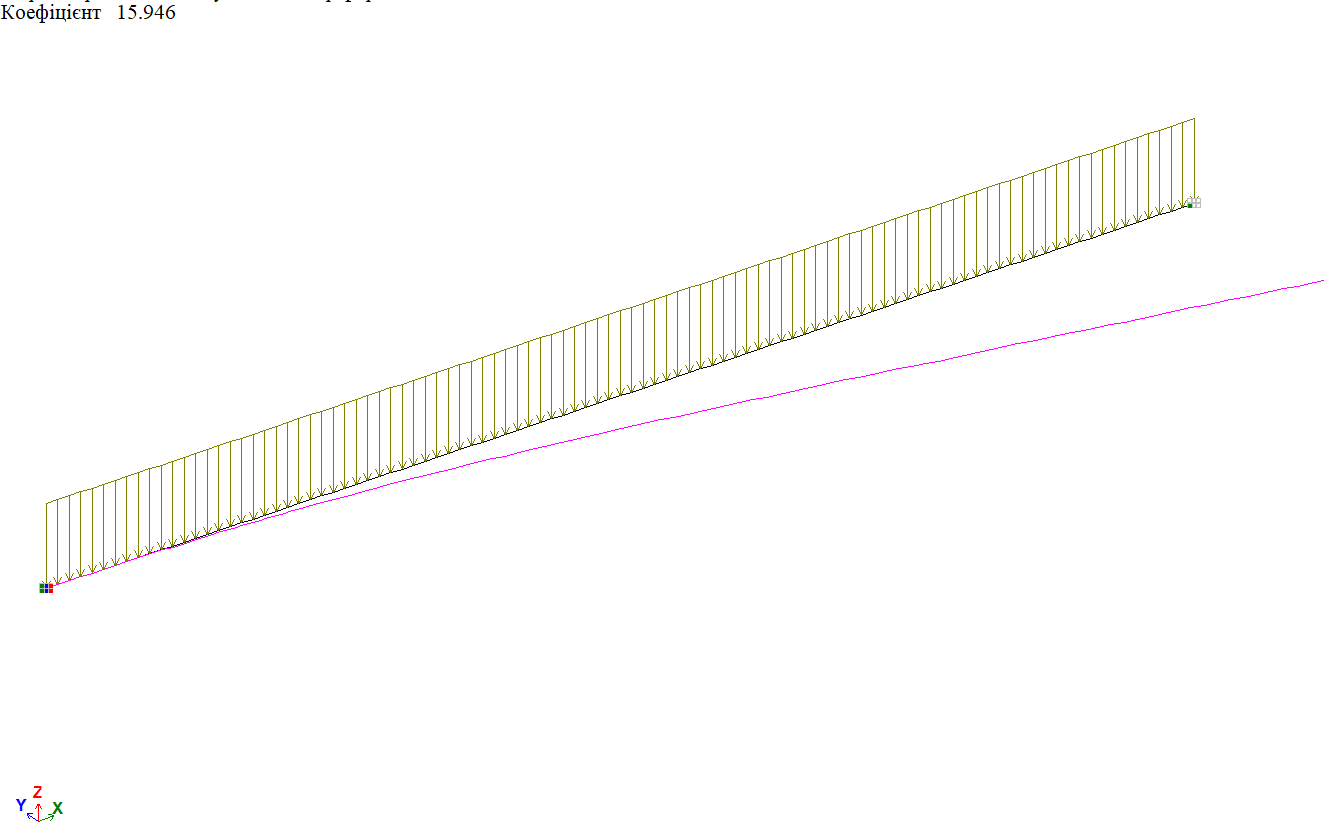
Buckling mode under a uniformly distributed load f at the free end of the cantilever, Variant 2
|
|
|
|
|
|
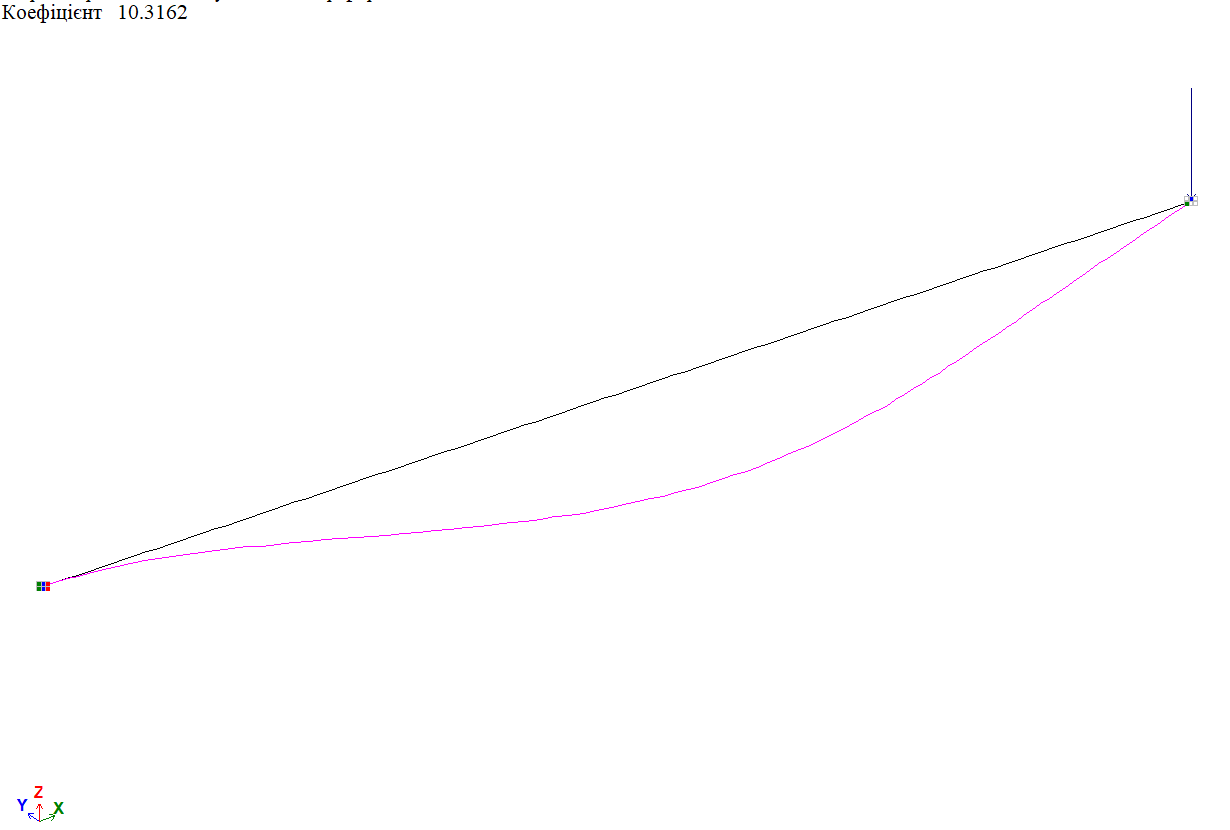
Buckling mode under a concentrated load F at the free end of the cantilever, Variant 3
|
Buckling mode under a bending moment M at the free end of the cantilever, Variant 3
|
Buckling mode under a uniformly distributed load f at the free end of the cantilever, Variant 3
|
|
|
|
|
|
Buckling mode under a concentrated load F at the free end of the cantilever, Variant 4
|
Buckling mode under a bending moment M at the free end of the cantilever, Variant 4
|
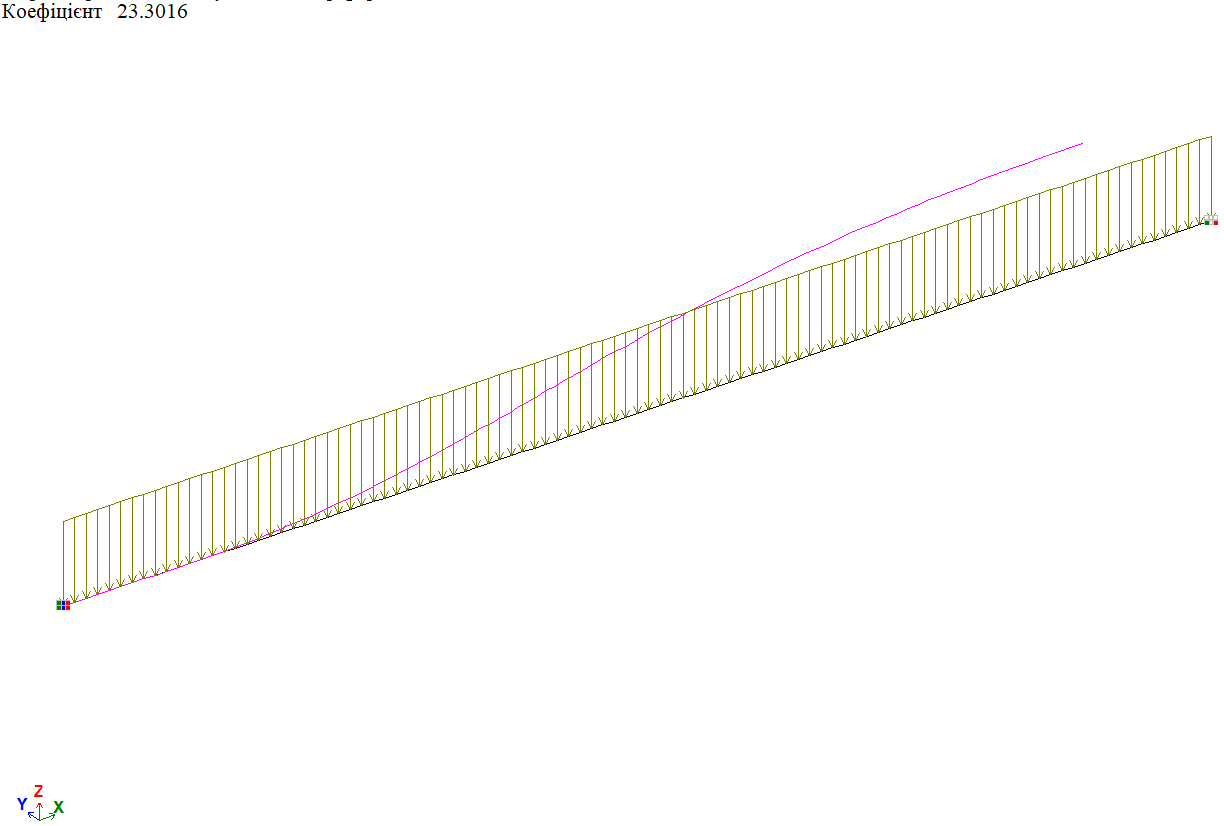
Buckling mode under a uniformly distributed load f at the free end of the cantilever, Variant 4
|
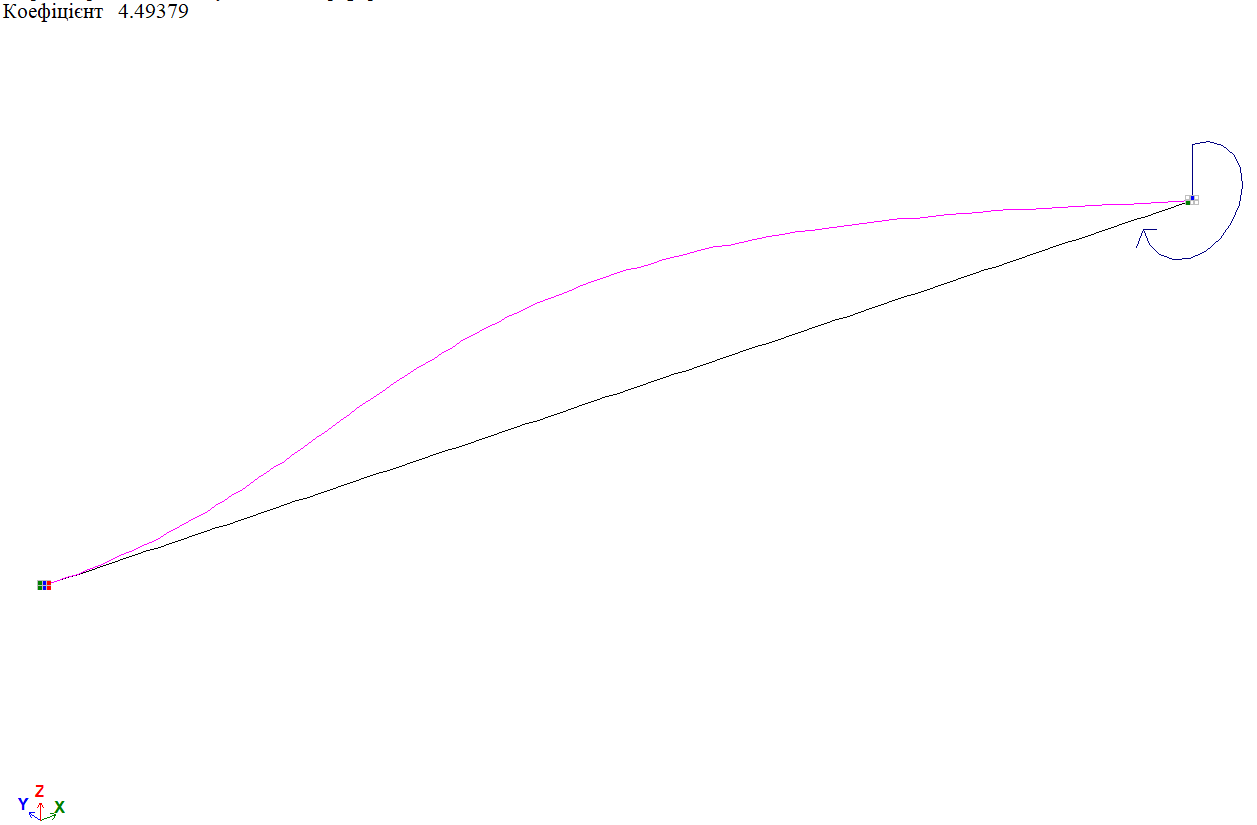
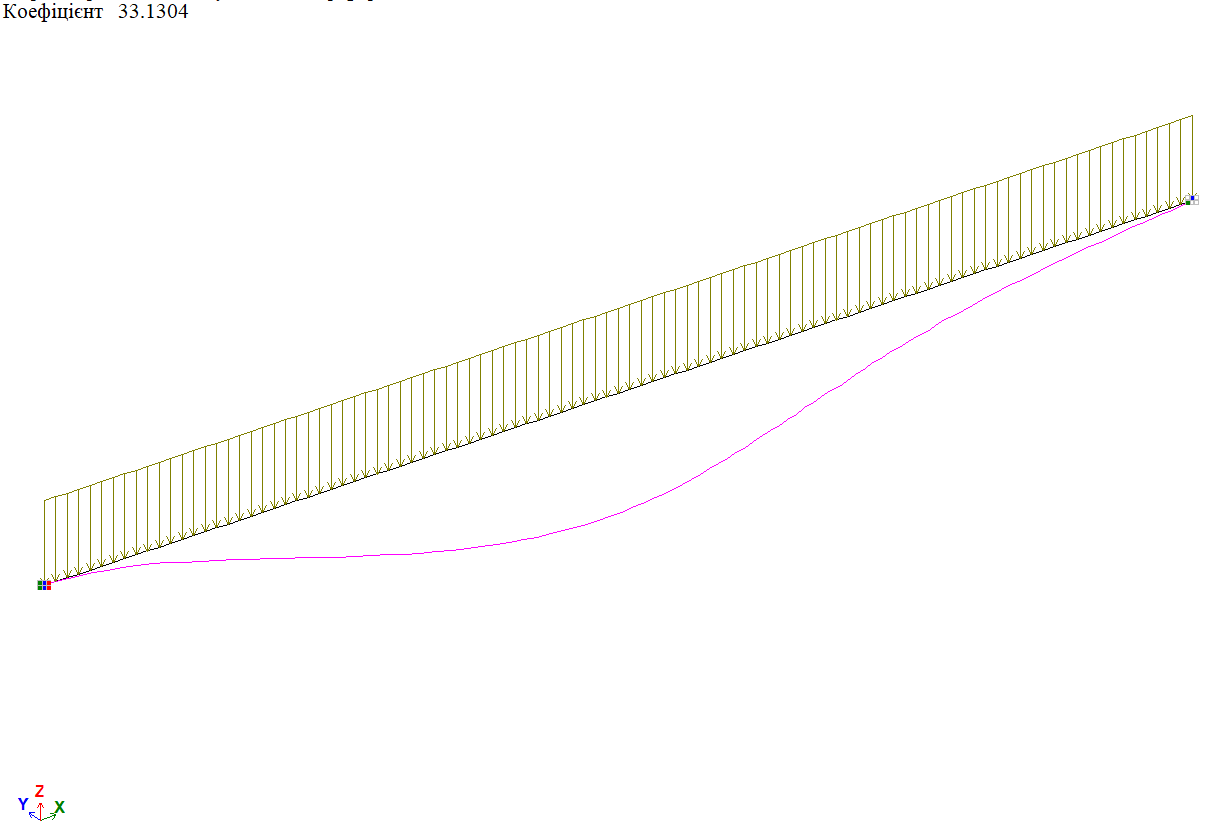
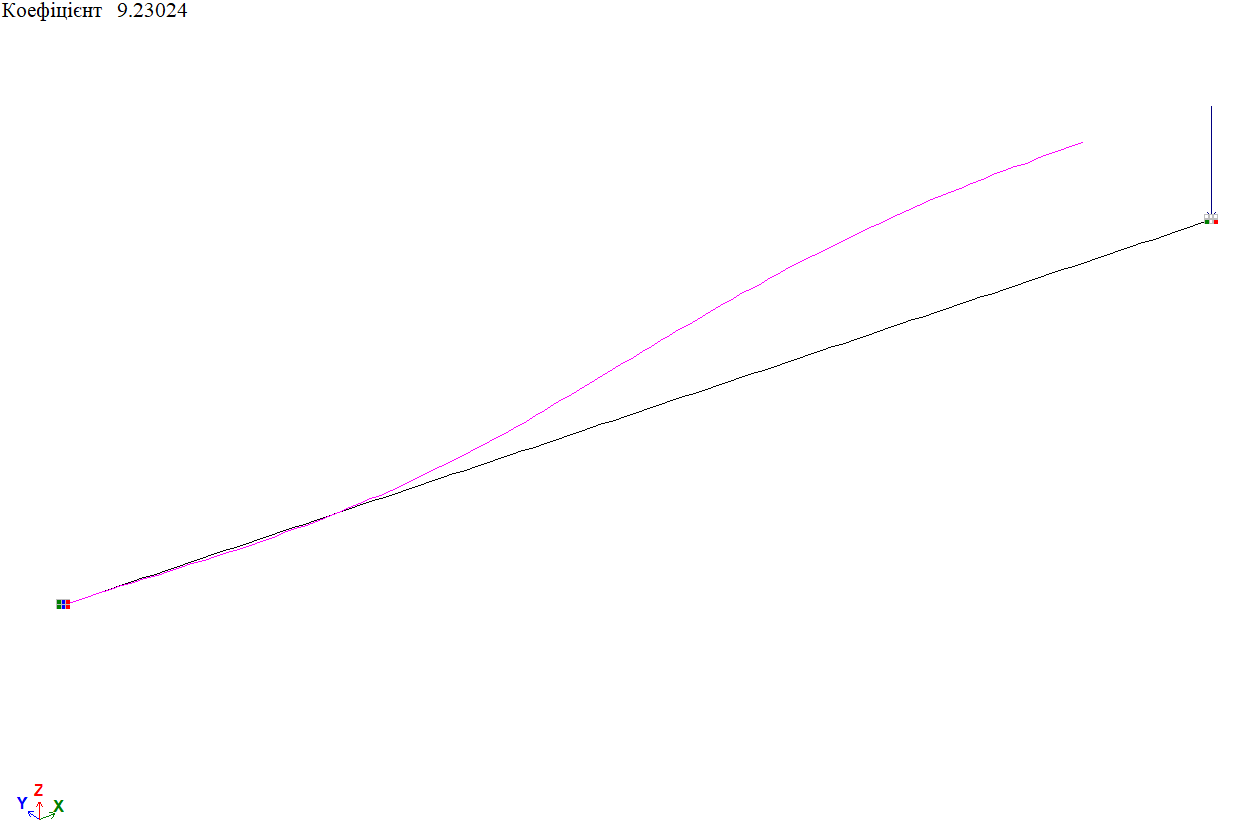
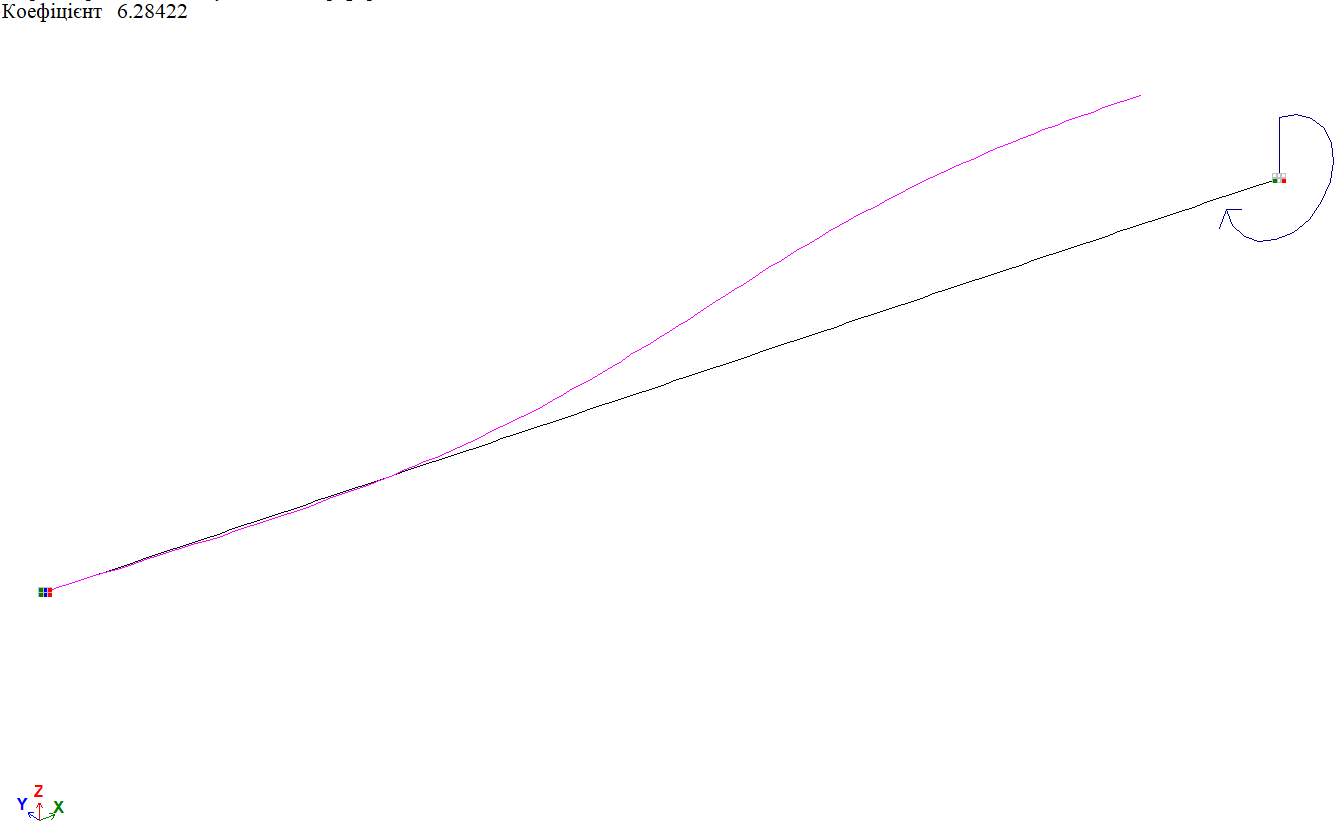
Comparison of calculation results
| Load | The unknown | Analytical solution | LIRA-FEM | Error, % |
| Boundary condition - variant 1 | ||||
| F | Critical load | 4,012 | 4,0127 | 0,017 |
| My/L | π | 3,14172 | 0,004 | |
| fL | 12,86 | 12,8539 | 0,047 | |
| Boundary condition - variant 2 | ||||
| F | Critical load | 5,54 | 5,56211 | 0,399 |
| My/L | π | 3,14172 | 0,004 | |
| fL | 15,9 | 15,946 | 0,29 | |
| Boundary condition - variant 3 | ||||
| F | Critical load | 10,3 | 10,3162 | 0,157 |
| My/L | 4,5 | 4,49379 | 0,134 | |
| fL | 33,15 | 33,1304 | 0,059 | |
| Boundary condition - variant 4 | ||||
| F | Critical load | 9,25 | 9,23024 | 0,214 |
| My/L | 2π | 6,28422 | 0,017 | |
| fL | 23,3 | 23,3016 | 0,007 | |
Download verification test
If you find a mistake and want to inform us about it, select the mistake, then hold down the CTRL key and click ENTER.
Comments